For high-school chemistry
The lab you’re allowed to touch
Practise the technique before you do it for real. Nothing here can break, spill, or be wasted, so you can run it as many times as you need.
- No account needed to practise
- Teachers sign in to save labs and assign them
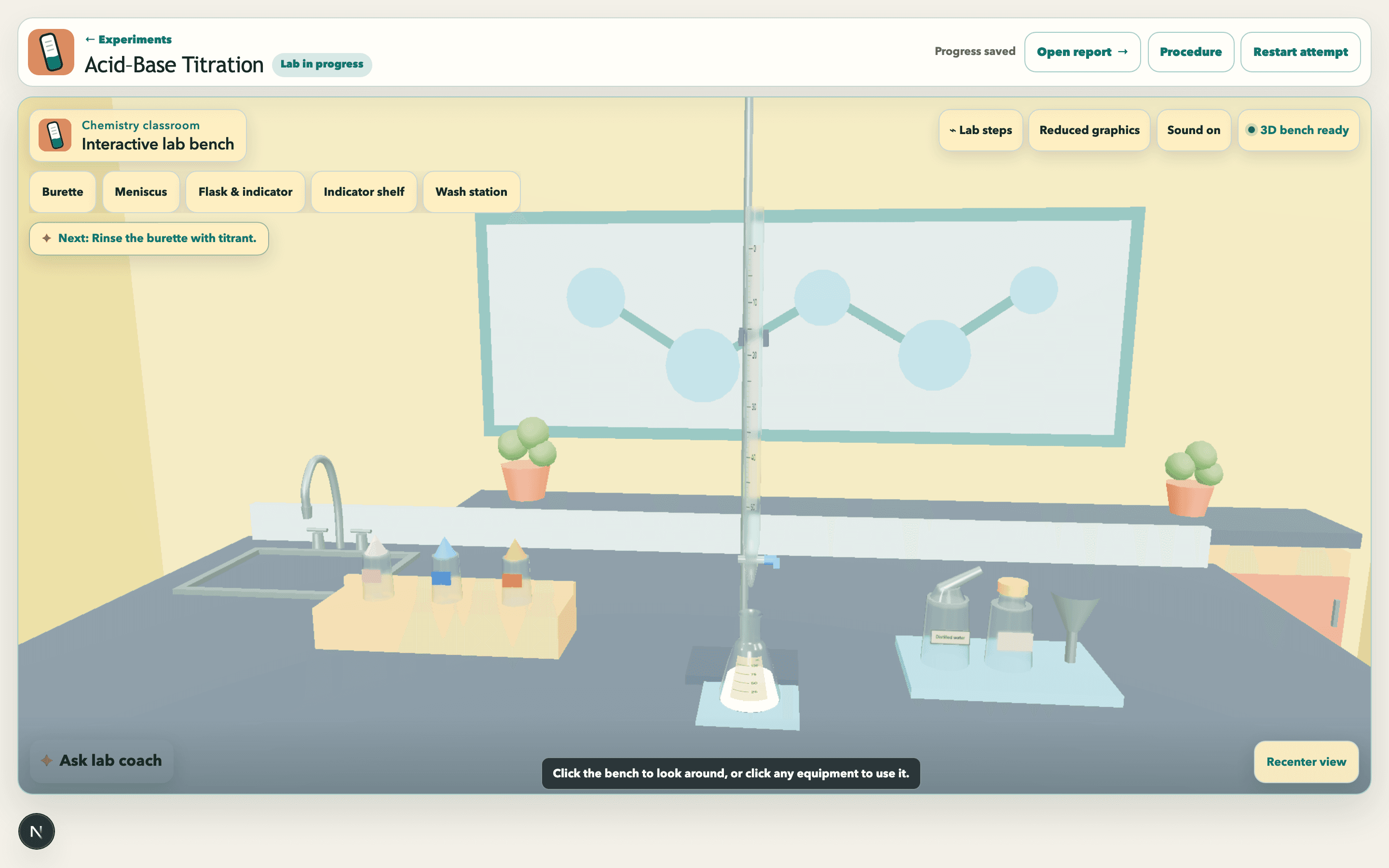
- The same chemistry every time, and it works by keyboard
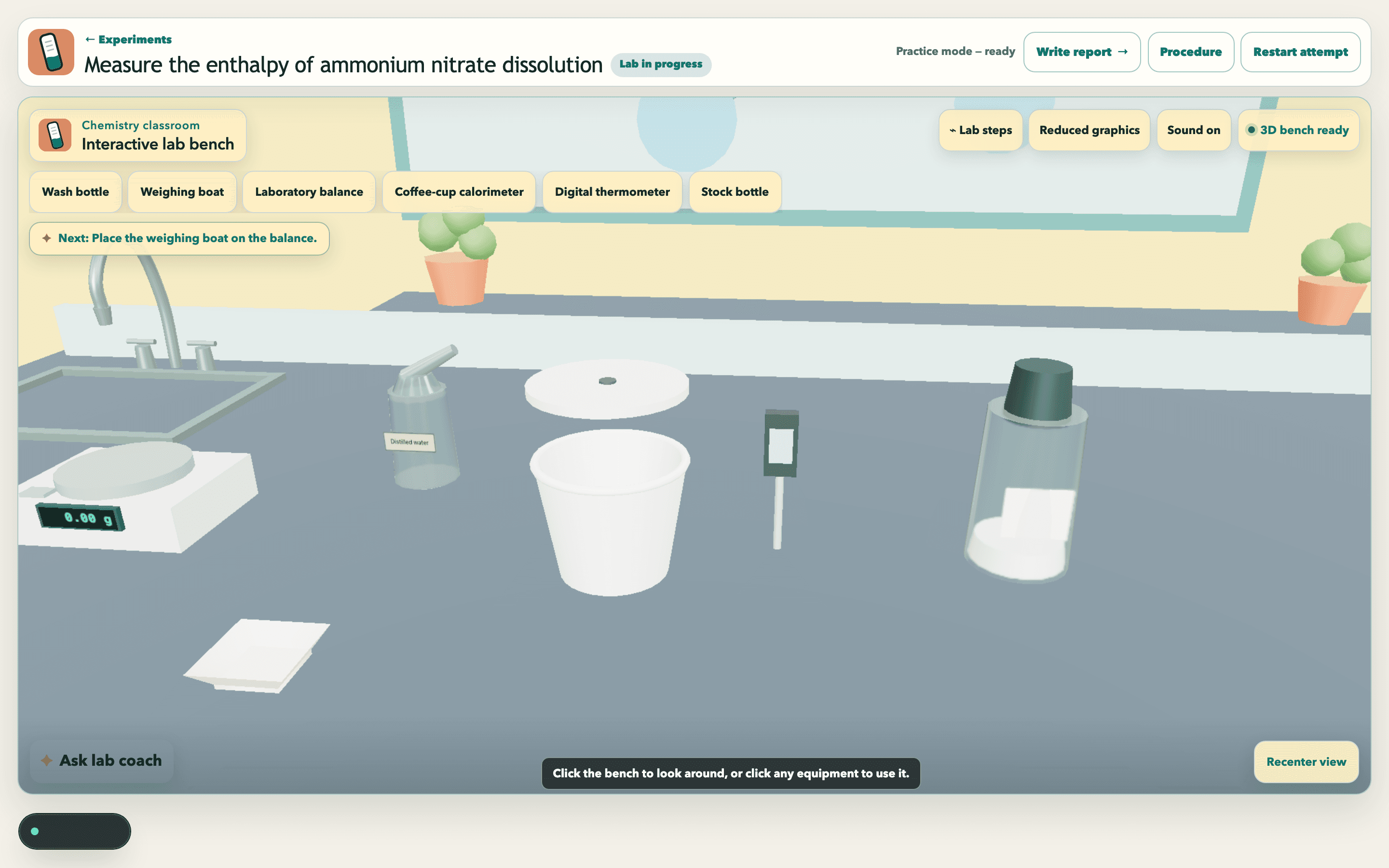
Handle the equipment, not a diagram
Tare the balance, weigh out the solid, stir it into water, and follow the temperature as it falls. You operate each instrument the way the procedure asks, and the bench responds to what you actually did with it.
- Every lab action has a keyboard path
- Reduced-graphics mode for shared Chromebooks
- Restart an attempt as often as you need
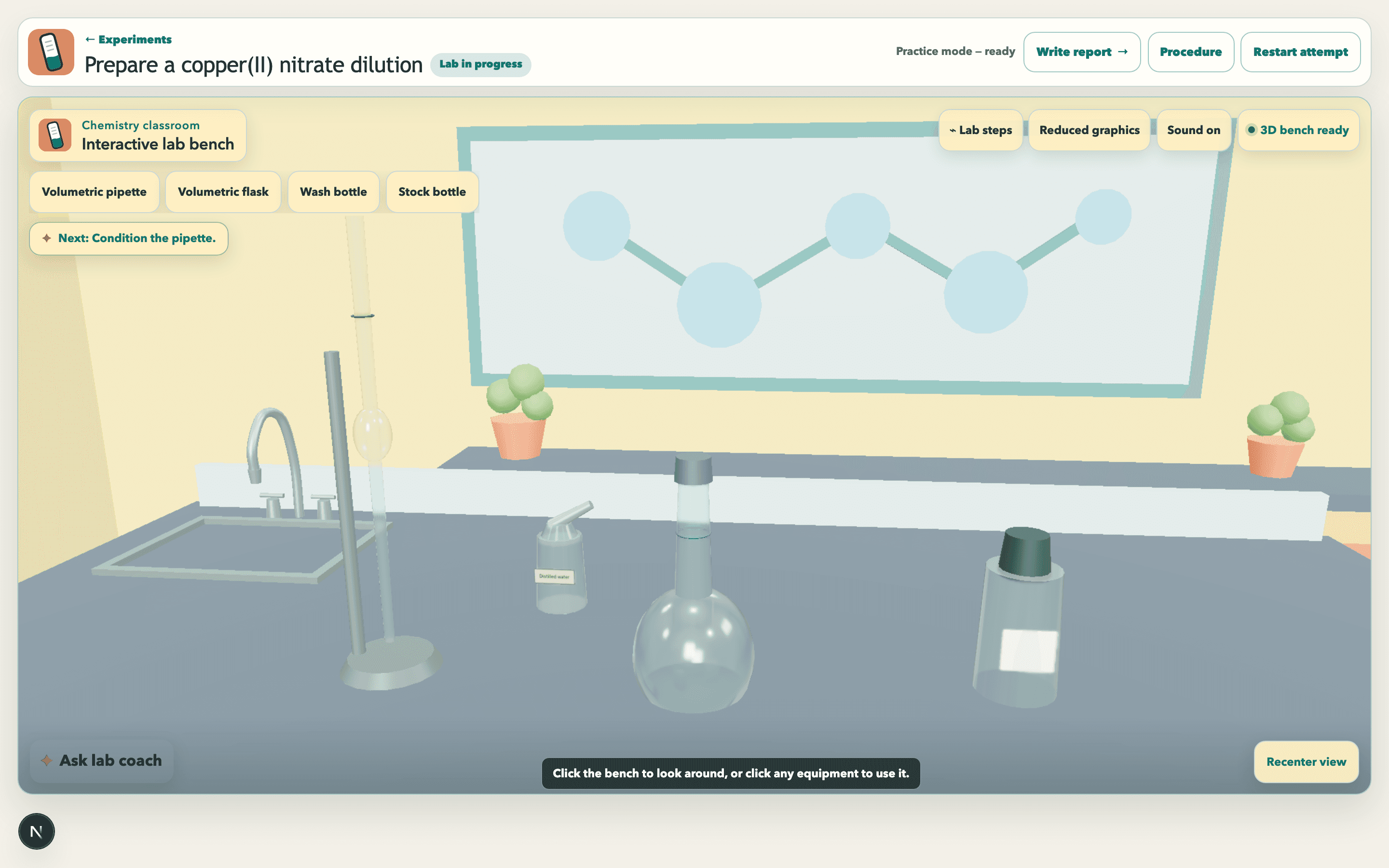
The chemistry does not bend to make you feel good
Concentrations, volumes, and temperatures come from a deterministic engine. Condition the pipette badly and the number moves — the same way, every time. Nothing on screen is generated to be encouraging.
The coach reads what you did and explains the technique behind it. It never invents a measurement.
Teachers build the lab, and see who is ready
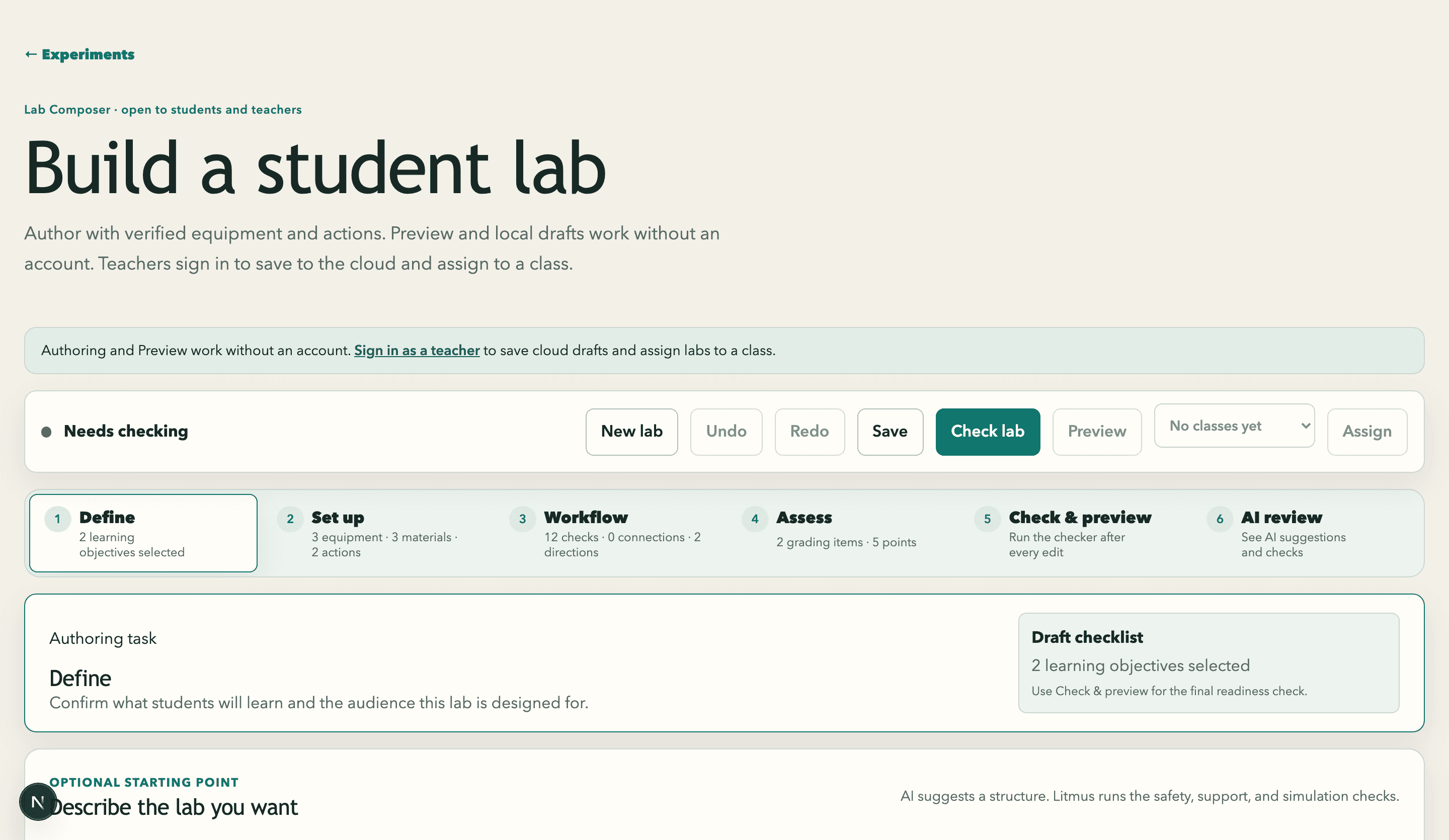
Compose a procedure from verified equipment and actions, run the safety and simulation checks, then assign it to a class. What comes back is a record of what each student did — not a summary a model wrote about them.
- Authoring and preview
- No account needed
- Saving and assigning
- Teacher sign-in
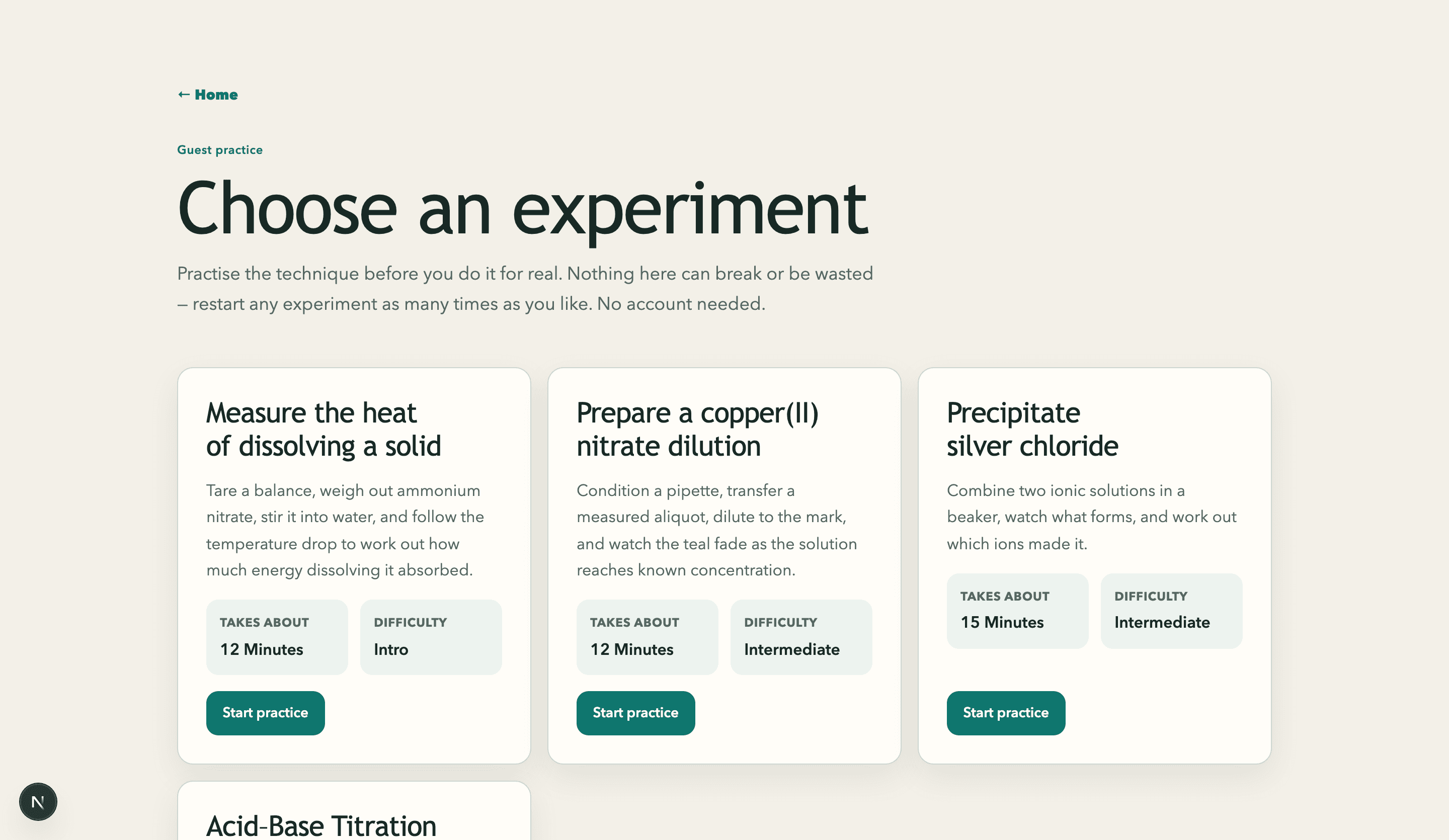
Pick an experiment and start
Titration, calorimetry, dilution, and precipitation are ready to run. No account, no setup — practise until the procedure is yours.